When the weather turns hot, Spain reaches for cold soup. Three appear on menus abroad and get muddled constantly. Here is how to tell them apart — and why a good one is a sign of a careful kitchen.
Gazpacho
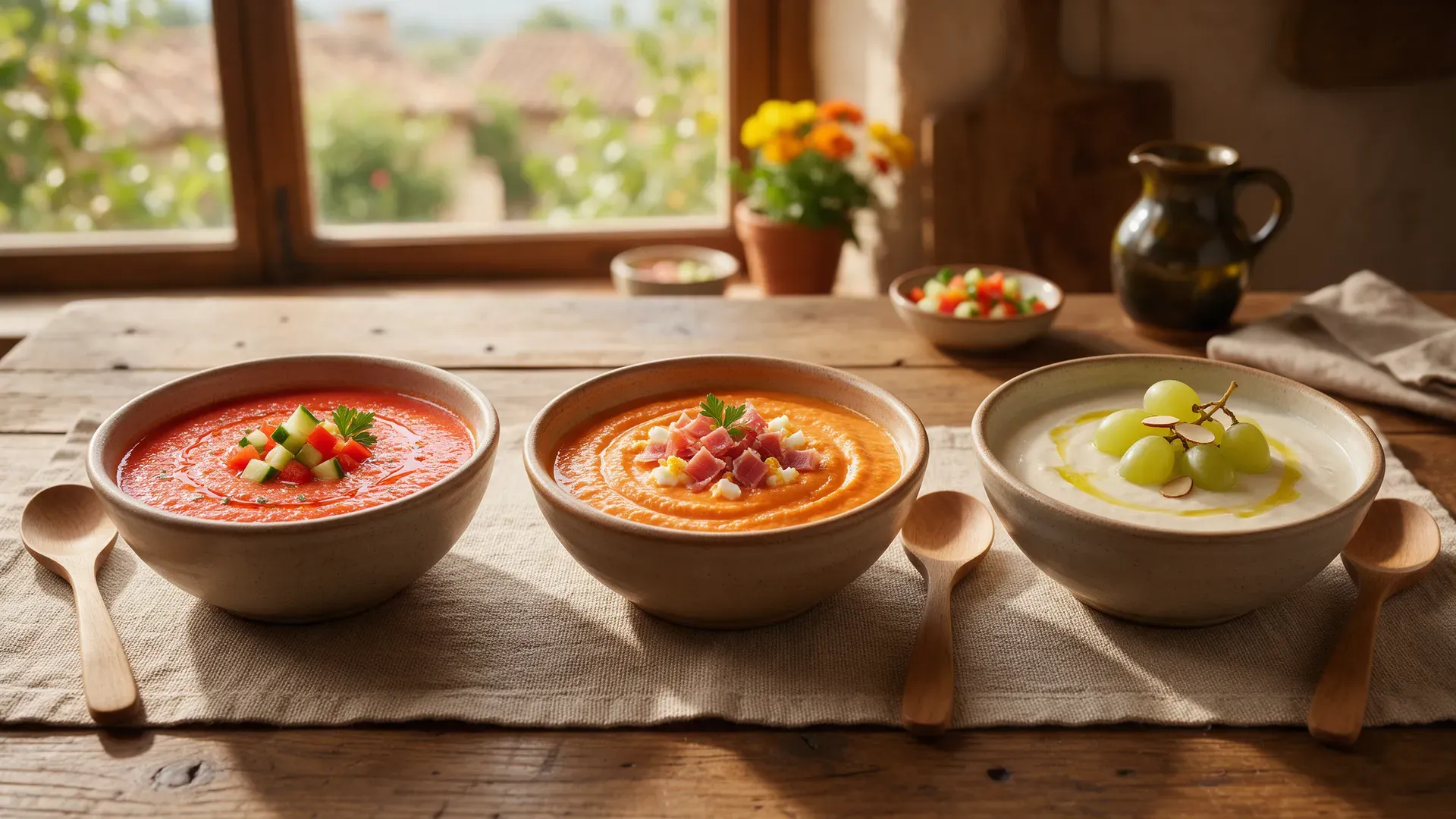
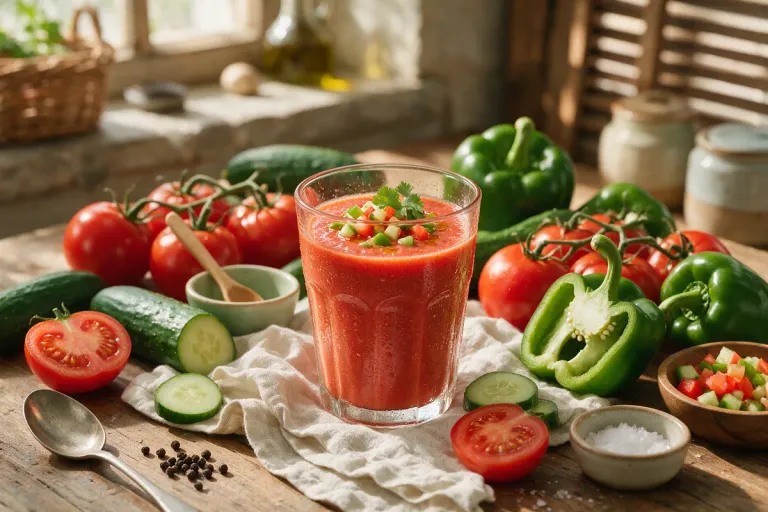
Gazpacho is the famous one: raw tomato, pepper, cucumber, garlic, oil and vinegar, blended and chilled, thin enough to drink. Bright, sharp and refreshing.
Salmorejo
Salmorejo is gazpacho’s richer cousin from Córdoba — just tomato, bread, garlic and a lot of olive oil, blended thick and topped with jamón and egg. Creamier, deeper, a small meal.
Ajoblanco
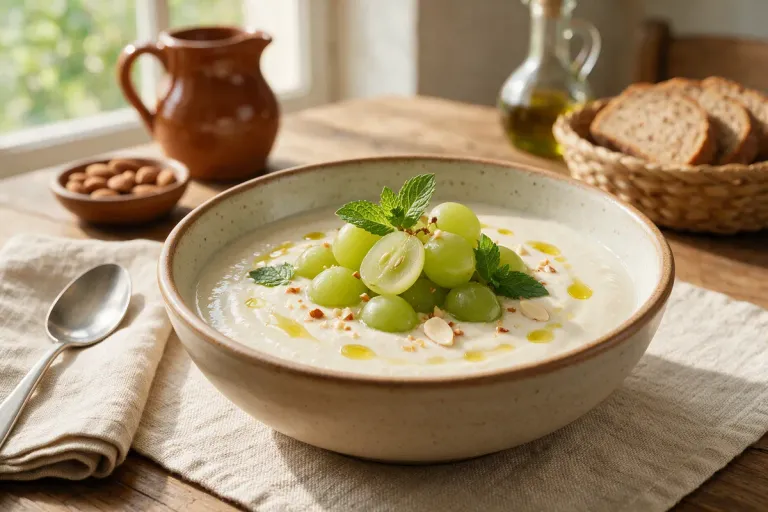
Ajoblanco is the white one: almonds, garlic, bread and oil, often served with grapes. Older than gazpacho, and a revelation to most first-timers.
Where to order them
- Sevilla Mía in Milan cooks Andalusian recipes, salmorejo included.
- Restaurante Castizo in Condesa, Mexico City, lists salmorejo among its tapas.
- Taburete in Bangkok serves a watermelon gazpacho.
- El Pote in Murray Hill, New York, has served Castilian food, gazpacho included, for more than 22 years.
A quiet quality test
A house that makes its own cold soups in summer is usually a house that cooks everything else with care. Find them in our directory.