Asturias sits on Spain's northern coast, between Galicia and Cantabria, facing the Cantabrian Sea. It is green, wet and mountainous, and its food reflects that: beans, pork, dairy, apples and seafood. Here are its best-known dishes, and what to expect when you order them.
Fabada asturiana
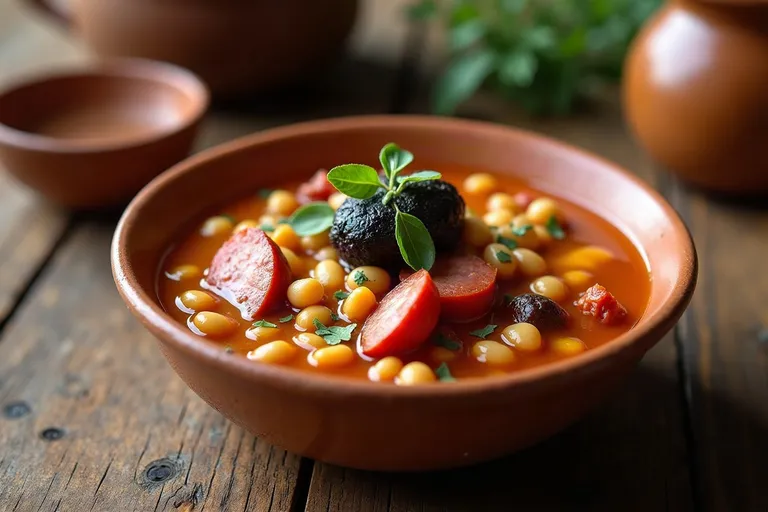
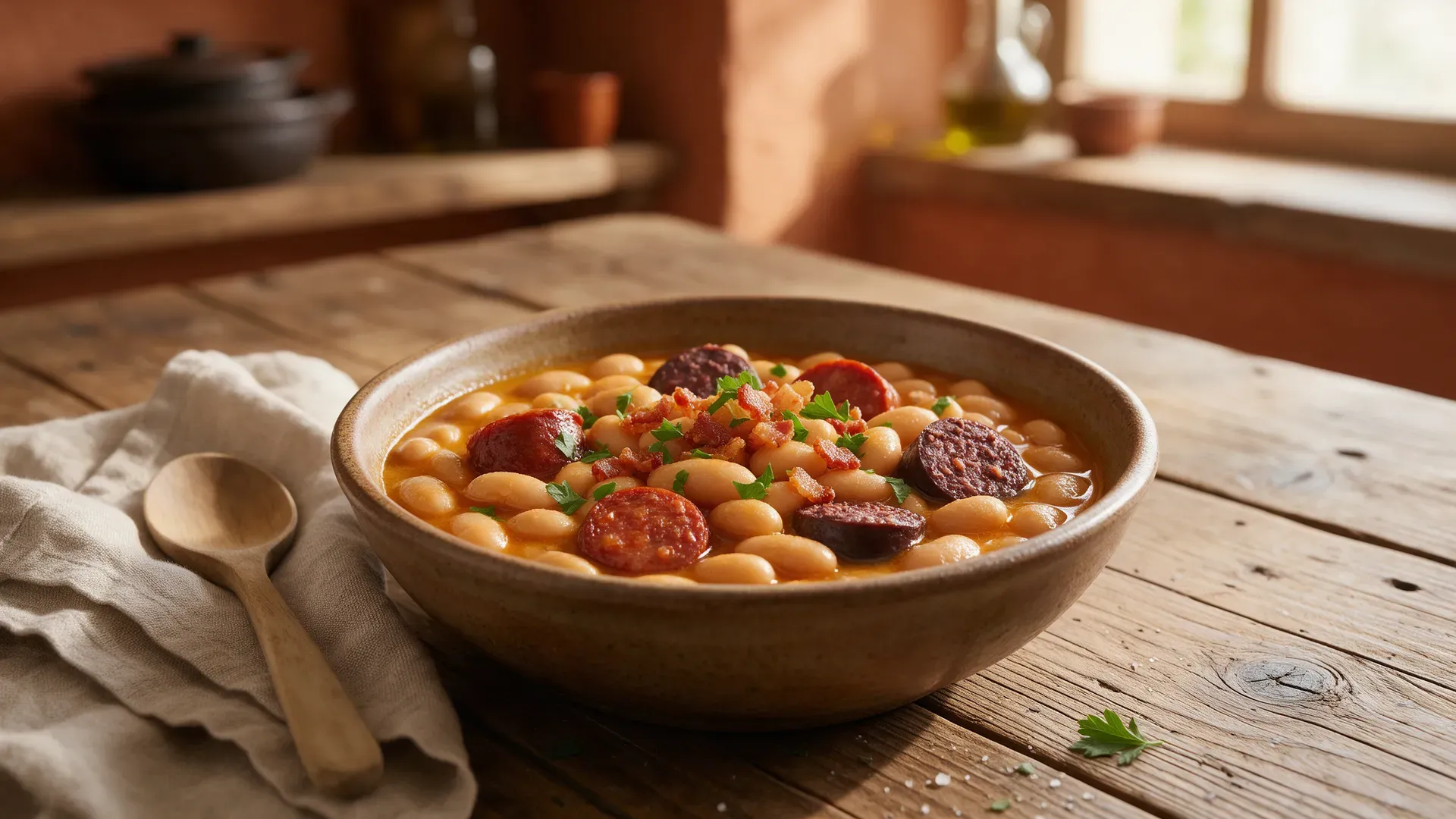
Fabada is the dish most people connect with Asturias. It is a slow-cooked stew of large, soft white beans called fabes, cooked with a set of pork products known together as the compango: chorizo, morcilla (blood sausage) and pork belly or salt pork. The beans should hold their shape while being creamy inside.
Asturian beans of the right type are protected under the name Faba Asturiana. Fabada is filling, and in Spain it is usually eaten as a midday dish rather than a late dinner. A related dish, fabes con almejas, swaps the pork for clams.
Cachopo
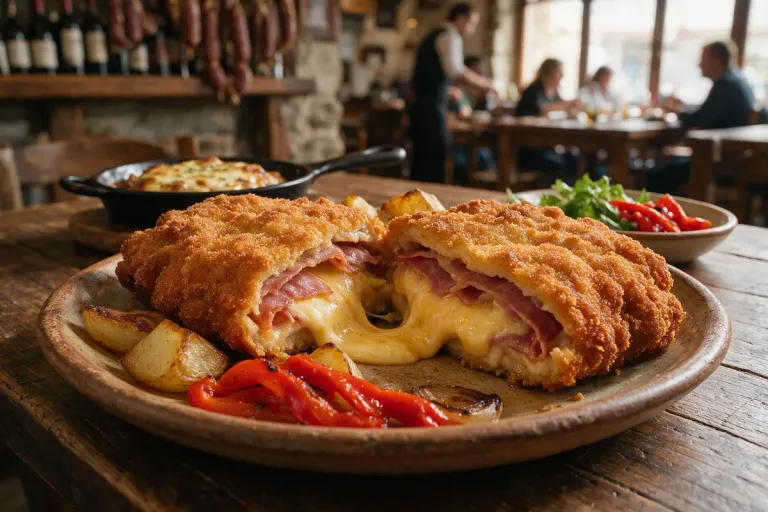
Cachopo is two large, thin veal fillets with cured ham and cheese between them, breaded and fried. It is big, and it is often shared. Fillings vary, and some kitchens use other cheeses or add peppers or mushrooms, but ham and cheese is the standard version.
Cabrales and other cheeses
Cabrales is a strong blue cheese from Asturias, protected by a designation of origin and matured in natural caves in the Picos de Europa area. Asturias also makes other cheeses, such as Gamonéu and Afuega'l pitu, though these are harder to find outside Spain. Abroad you may meet it as a sauce for steak, on a cheese board, or as an accent: the listing for Boqueria Soho in New York, for example, mentions Iberian devils on horseback with a hint of Cabrales. See our guide to Spanish cheese for more.

Cider and the sidrería
Asturias is cider country. Natural Asturian sidra is still rather than sparkling, so it is poured from a height, a technique called escanciar, to add air. The waiter pours a small amount, a culín, into a wide glass, and you drink it straight away while it is lively. In a sidrería, or cider house, you order the bottle and staff keep pouring. Our Spanish cider guide goes deeper.
Desserts
Two sweets show up often in Asturian cooking: arroz con leche, rice pudding that in Asturias is commonly finished with a caramelised sugar top, and frixuelos, thin pancakes similar to crêpes.
Where to try Asturian dishes abroad
These venues in our directory mention Asturian dishes or Asturian cooking in their own listings:
- Vega, Mexico City: the menu features Asturian fabada, alongside clams in albariño and arroz del señorito.
- La Mallorquina Bosques, Mexico City: fabada is among the dishes named on its listing.
- Huevos de Oro, São Paulo: Asturian cachopo is on the menu with tortilla, pan tumaca and huevos rotos.
- El Asturiano, Bogotá (Chapinero): specialises in Asturian cuisine and also serves paella.
- El Peninsular, Cartagena: focuses on Asturian and northern Spanish cooking.