Manchego is a sheep's milk cheese from La Mancha and one of Spain's protected cheeses. Our Spanish cheese guide looks at the many other cheeses Spain makes. This post stays with Manchego itself: how to read the label, what the age words mean and how it is served.
What makes a cheese Manchego
Queso Manchego has a protected designation of origin (DOP). To carry the name, it has to be made from the milk of Manchega sheep raised in the designated area of La Mancha, the high plain of central Spain, and made and aged there under the rules of its regulatory council. The name is protected in the European Union under the DOP rules, so within the EU a sheep's milk cheese made elsewhere, or a cheese made from mixed cow, goat and sheep milk, can't be sold as Manchego, however similar it looks.
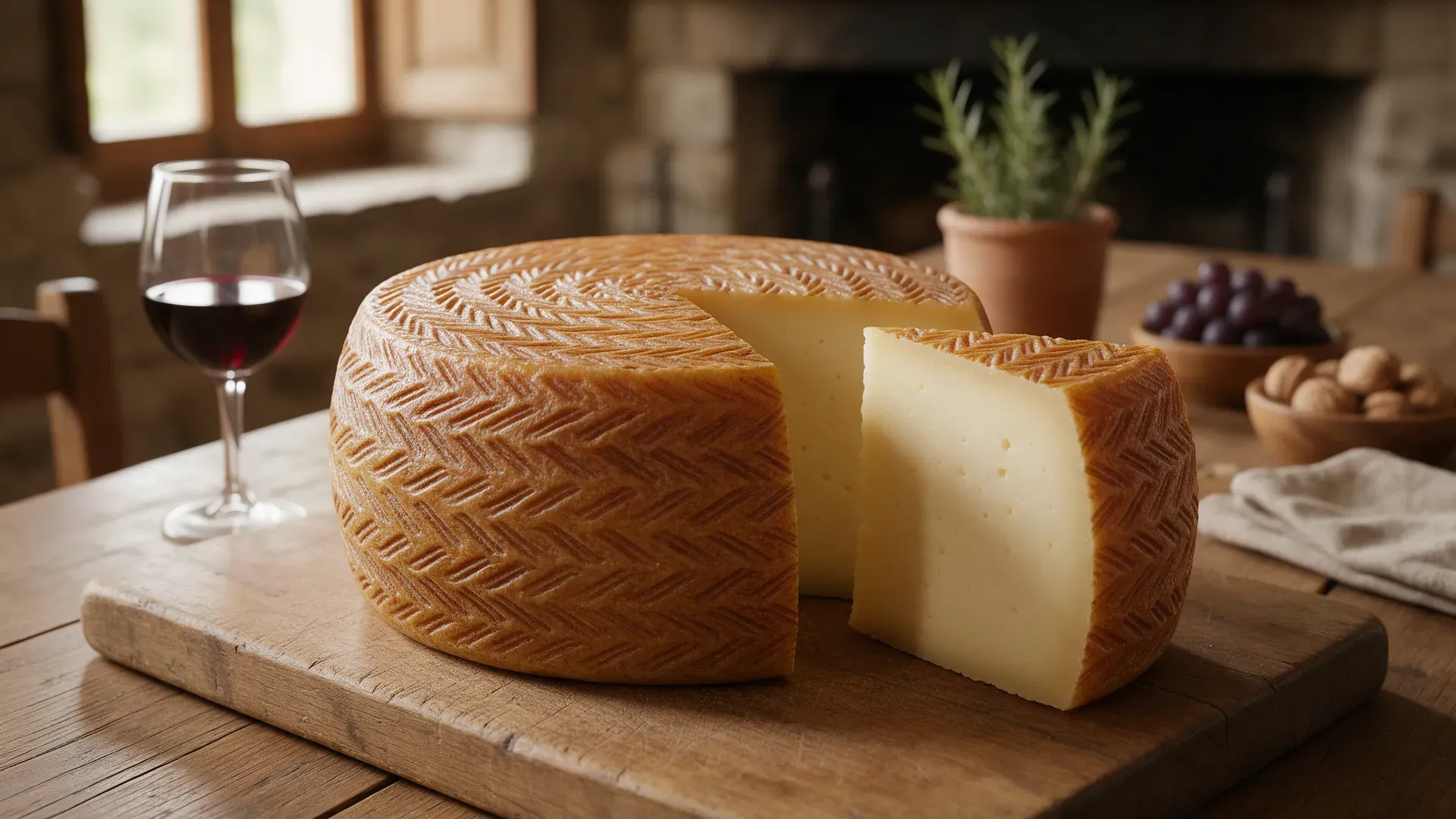
The rind gives the cheese its look. The zigzag pattern on the sides comes from the plaited esparto-grass moulds shepherds once used; today moulds usually reproduce it. The top and bottom faces carry a flower-like pattern pressed in during shaping.
How to read the label
- Casein plate: a small plate set into one face of every genuine wheel, carrying the DOP identification.
- Back label: a numbered label issued by the regulatory council, on the wheel or on pre-cut pieces.
- Artesano: the cheese was made with raw (unpasteurised) sheep's milk. Without that word it is usually made from pasteurised milk.
- Age word: semicurado, curado or viejo, explained below.
Semicurado, curado, viejo
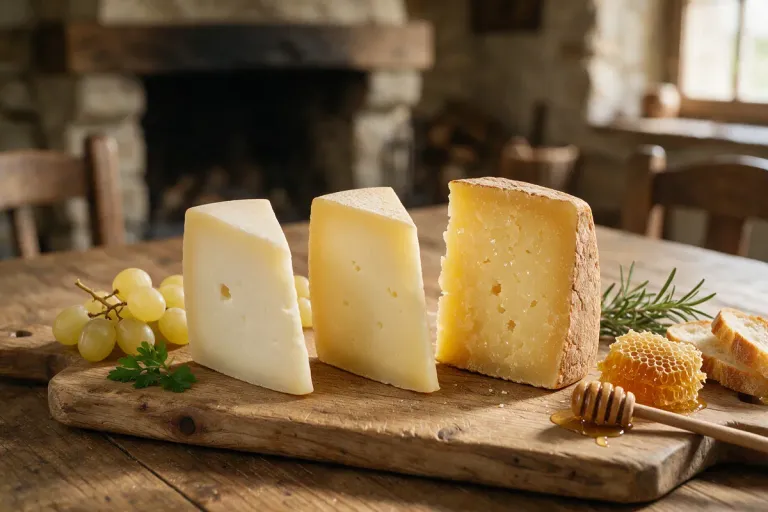
These words describe how long the cheese has been aged. The exact time depends on the producer, but as a rule the older the cheese, the firmer, drier and stronger it gets.
- Semicurado: younger, softer and milder, with a gentle sheep's milk flavour.
- Curado: firmer and more pronounced. This is the style many people picture when they think of Manchego.
- Viejo: aged longest. Hard, sometimes crumbly, with a sharper and more intense taste.
If a menu just says 'Manchego', it's reasonable to ask which age it is. The answer tells you more about the taste than the name does.
How it is served
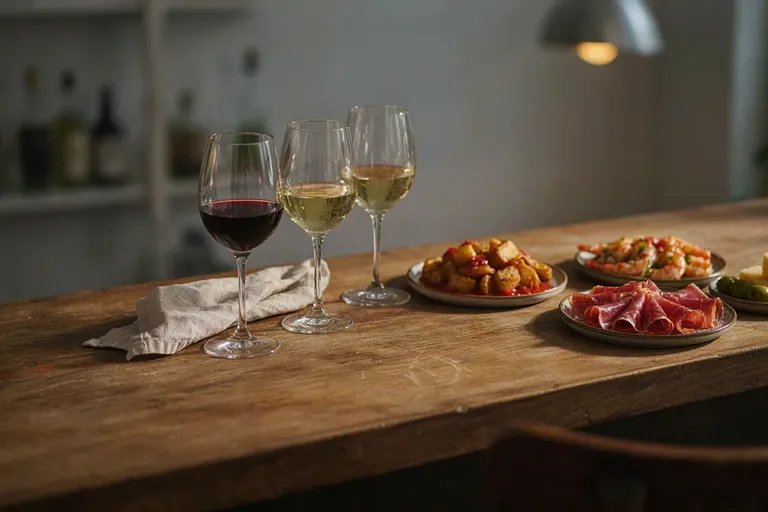
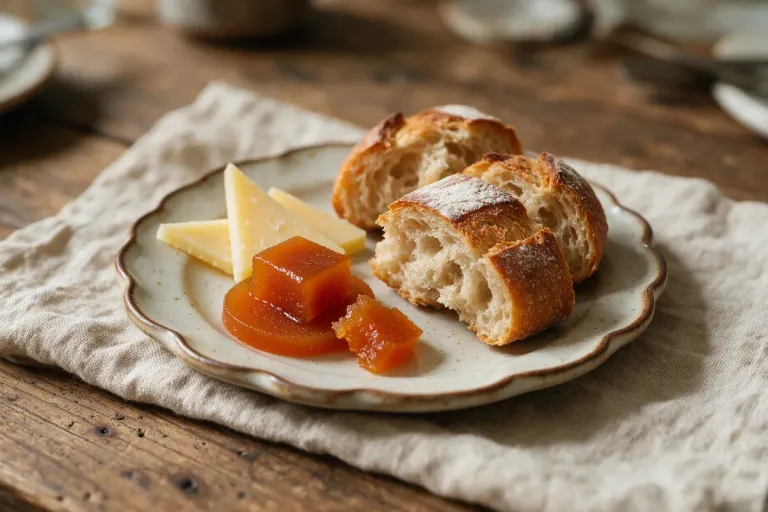
In a Spanish bar, Manchego usually comes as thin triangular slices cut from a wedge, often with bread. The rind is normally left on the plate. Common partners are membrillo (quince paste), cured meats such as jamón serrano, and olives. You will also find Manchego preserved in olive oil, sold in jars as queso en aceite.
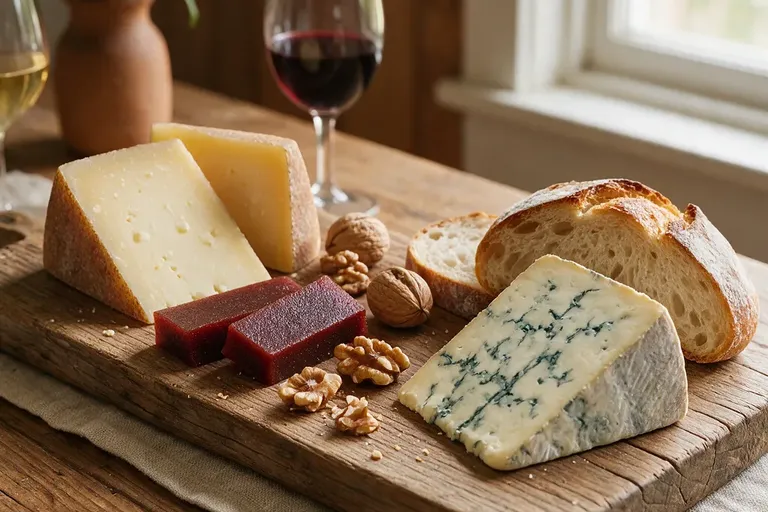
On a mixed cheese board, it often sits in the middle of the range: milder than a long-aged blue like Cabrales, firmer than a soft cow's milk cheese like Tetilla.
Where to try Manchego
These venues in our directory mention Manchego in their own records:
- Don Pintxos, Brno: a Basque-style wine and tapas bar serving pintxos, cured ham and Manchego, with more than 150 wines on its list.
- Tapas Barcelona, Gdynia: started out importing Spanish wines and later added charcuterie; its record names Manchego, olive oil and Serrano ham as highlights.
- Cafe Ba-Ba-Reeba!, Chicago: traditional tapas and seasonal dishes, with paella, Manchego and jamón ibérico named in its record.