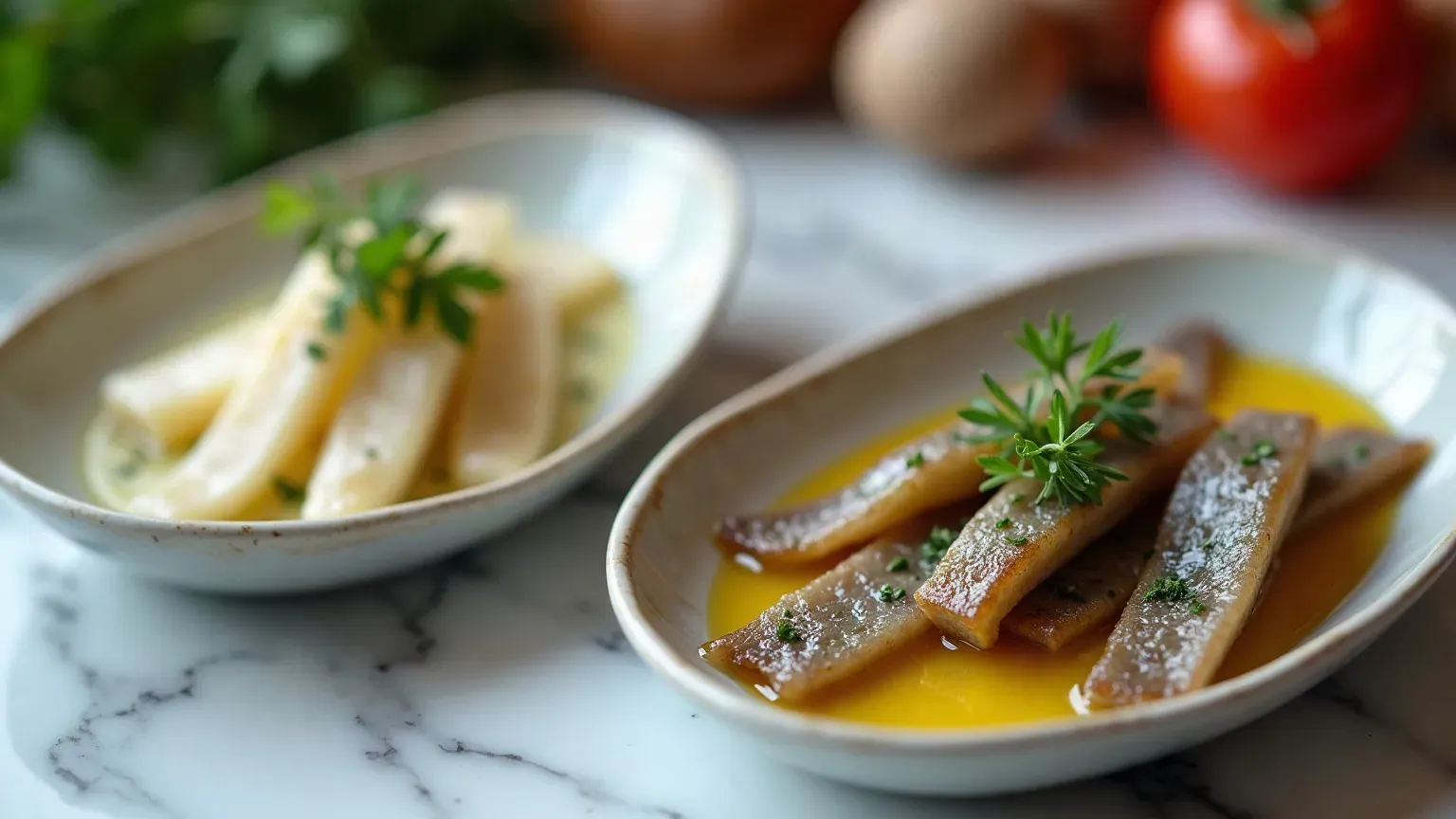
A Spanish menu abroad will often list both boquerones and anchoas, and English translations tend to render both as anchovies. They are the same species, Engraulis encrasicolus, caught along Spain's Atlantic and Mediterranean coasts. What changes is what happens to the fish afterwards, and the two results have almost nothing in common on the plate.
Our boquerones dish page covers the vinegar cure itself. This post is about telling the two apart on a menu and ordering each one well.
Boquerones: fresh fish, vinegar or hot oil
On most menus, boquerón means the fresh fish, or fish that was fresh before it went into the marinade. The naming is not absolute: in parts of northern Spain the fresh fish is called anchoa as well. The two standard boquerón preparations are:
- Boquerones en vinagre. Raw fillets cured in vinegar until the flesh turns opaque white, then dressed with olive oil, garlic and parsley. Served cold. Vinegar does not kill the anisakis parasite. EU hygiene rules require fish that will be eaten raw or marinated to be frozen at some stage before it is served, with exemptions for some farmed fish, so a restaurant in Spain should be freezing wild anchovies for this dish. Outside Spain, ask. The texture is firm and the taste is sharp and clean. This is a bar tapa, often eaten with a cold beer, and bars across Spain serve it, though it is most associated with Málaga and the Andalusian coast.
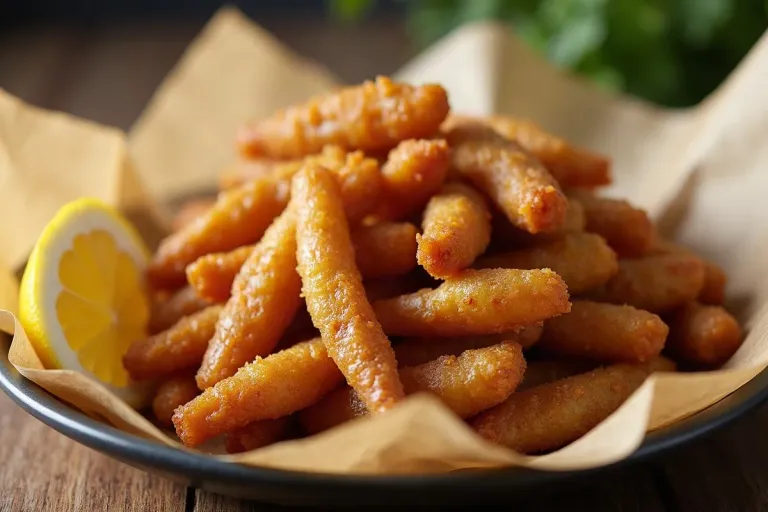
- Boquerones fritos. Whole small anchovies dusted in flour and deep-fried, often eaten whole. This is part of the Andalusian pescaíto frito tradition and usually arrives as a plate or ración rather than a single bite. Lemon on the side, nothing else needed.
If a menu just says boquerones with no qualifier, en vinagre is the usual meaning. Ask if you are unsure, because the two dishes are not interchangeable.
Anchoas: salt, time and olive oil
Anchoa is the cured product. The fish are salted in barrels for months, then filleted by hand and packed in oil. The fillets come out brown, soft and intensely savoury. The salt cure concentrates the flavour, so a single fillet on a piece of bread is a normal portion.
The Cantabrian coast in northern Spain is the reference region. Santoña, in Cantabria, is the town most associated with the trade, and tins labelled anchoa del Cantábrico command a premium. L'Escala, on the Catalan coast, has its own long-standing anchovy industry. A good Spanish anchoa is far less harsh than the small, very salty fillets sold for pizza: it should taste of fish first and salt second, and the texture should be tender, not stringy.
Anchoas are often listed by the unit, so a menu line like anchoa del Cantábrico followed by a price per fillet is normal. Some restaurants serve a whole tin at the table. Either way the price reflects hand-filleting and a long cure, so a plate of six or eight is a serious order rather than a cheap nibble.
Ways you will see them served
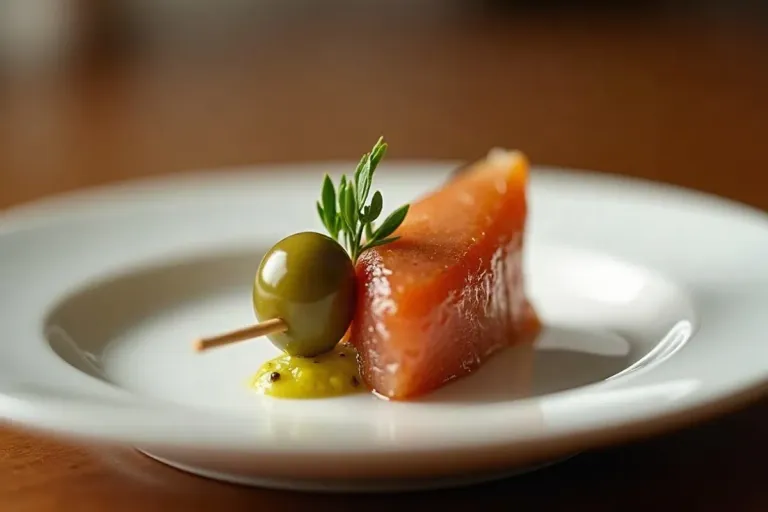
- Gilda: a skewer of anchoa, green olive and pickled guindilla pepper, the classic Basque pintxo. See our gilda page.
- Matrimonio: one boquerón en vinagre and one anchoa laid side by side on bread. The name means marriage; the white and brown fillets are the couple.
- Anchoas con tomate or boquerones con tomate: fillets on grated tomato or tomato bread.
- Anchoas with butter on toast, a northern Spanish habit that pairs the salt with fat.
- Boquerones with a caña of beer or a glass of vermouth; anchoas with vermouth or a dry sherry such as fino or manzanilla.
Common ordering mistakes
- Expecting anchoas to be mild. They are salty by design. If you want the gentler version, order boquerones en vinagre.
- Ordering boquerones fritos expecting a one-bite tapa. It usually arrives as a plate.
- Treating anchoa prices as a mistake. Per-fillet pricing is standard for Cantabrian anchovies.
Where to try them
Three restaurants in our directory list anchovies in their own descriptions:
- Tapárna in Prague's Letná district lists boquerones with tomato alongside croquetas, jamón, chorizo and Spanish cheeses.
- MoVida Bangkok in Ekkamai, chef Frank Camorra's Thai outpost, names Cantabrian anchoas among its tapas, with cecina and fideos negros.
- Tapisco in The Hague lists anchovies among the Spanish products on its menu, alongside seafood, empanada and squid.
For the fried version, look for pescaíto frito or boquerones fritos on Andalusian-leaning menus, and expect to share the plate.