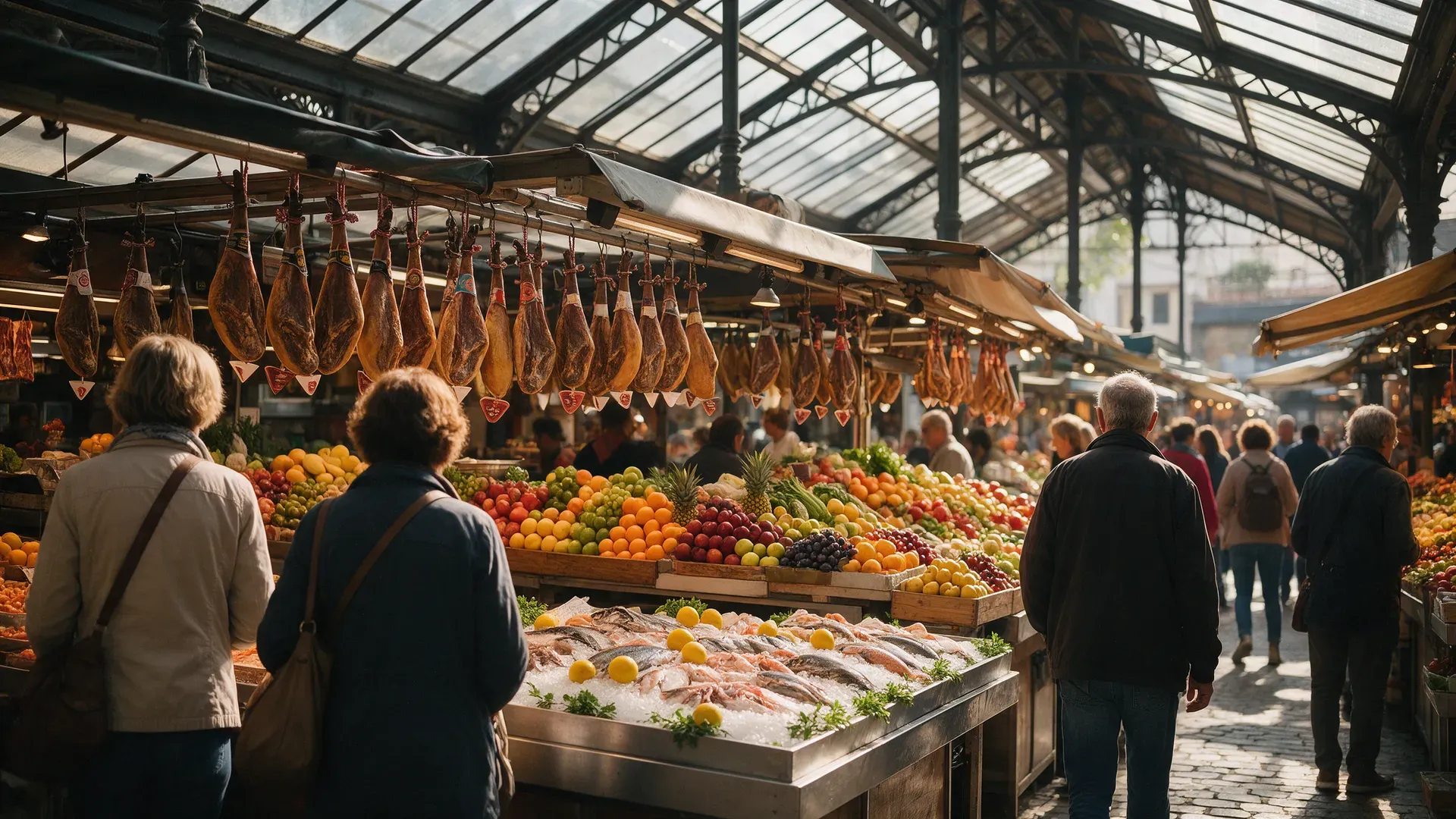
Ask a Spanish cook where the food on the table came from and there is a good chance the answer is "del mercado". Almost every Spanish town and city neighbourhood has a covered municipal market: a hall of separate stalls, each run by a butcher, a fishmonger, a greengrocer, a charcutero or a cheese seller. Supermarkets have taken a big share of the shopping, but the market is still where many Spaniards go for fish and fresh produce, and where a lot of Spanish food culture is on display.
How a Spanish market works
A mercado is not one shop. It is dozens of small businesses under a shared roof, often family-run for generations. You queue at each stall separately, and the custom is to ask "¿quién es el último?" ("who's last?") when you arrive, so you know whose turn comes before yours.
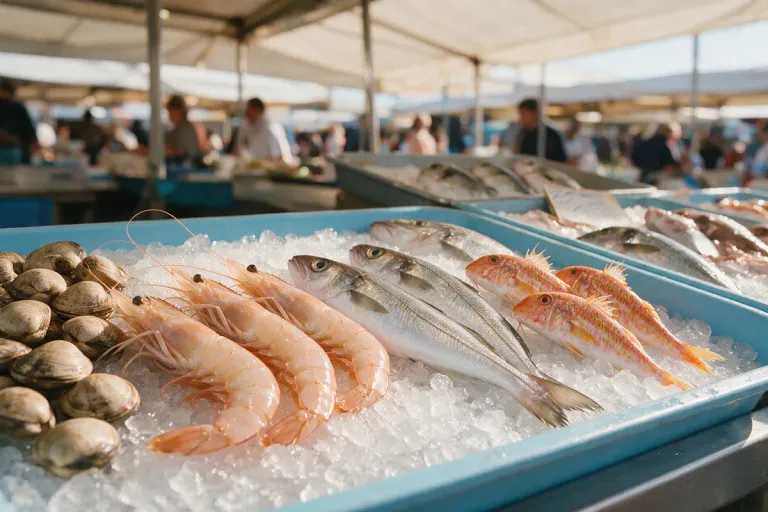
Shopping this way changes how people cook. You buy what looks good that day rather than following a fixed list, and the stallholder will usually clean and prepare it for you: scaling and filleting fish, cutting meat to order, slicing ham by hand. Ask the fishmonger how to cook something and you'll get an answer.
Markets are also where seasonality is easiest to see. Spring brings artichokes and broad beans, summer the tomatoes and peppers for gazpacho, autumn the wild mushrooms, and winter the citrus.
The famous ones
A few markets have become destinations in their own right:
- La Boqueria in Barcelona, just off La Rambla, is the best-known food market in Spain. It is busy with tourists, but still works as a market, with some of the city's best produce stalls.
- Mercado de San Miguel in Madrid, near the Plaza Mayor, is housed in an early 20th-century iron and glass building. It was reopened in 2009 as a gourmet market where most stalls sell food and drink to eat on the spot.
- Mercado Central de Valencia, a large modernista building that opened in 1928, is one of the biggest covered markets in Europe and is still a working food market.
Eating at the counter
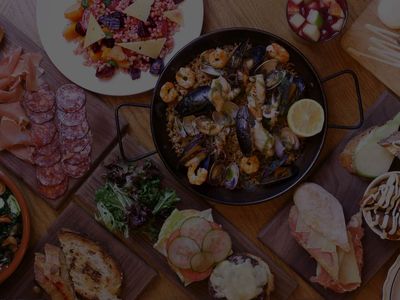
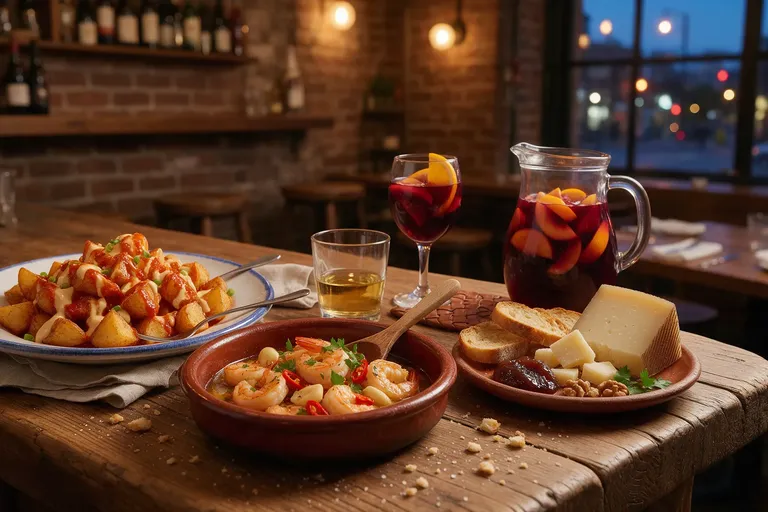
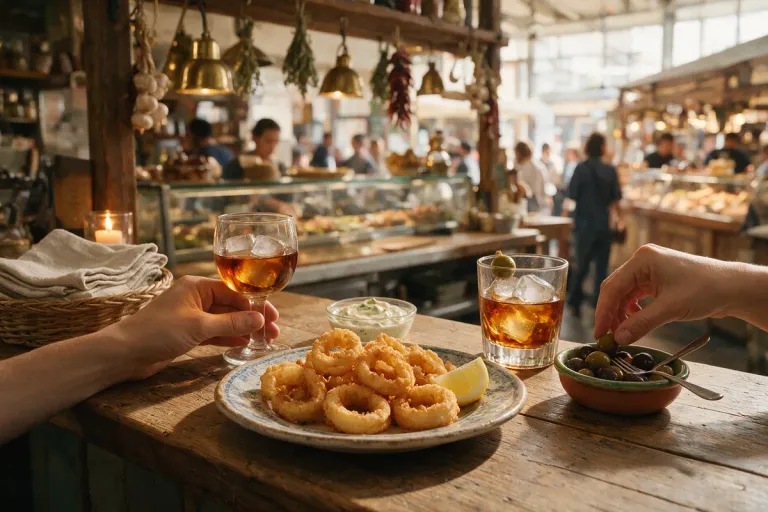
For visitors, the easiest way into market culture is the market bar. Many Spanish markets have small counters, often just a few stools, that cook straight from the stalls around them: fried fish, grilled prawns, garbanzos with spinach, a plate of ham, a glass of wine or vermouth. The menu follows the market, and the cooking is simple because the produce is the point.
This is also where the traditional ultramarinos fits in. The word, literally "overseas", once meant shops selling imported colonial goods like coffee, cocoa and sugar. Today an ultramarinos is a neighbourhood grocery selling tinned fish, cured meats, cheese and wine, sometimes with a counter to eat and drink at.
The market idea abroad
Several Spanish restaurants in our directory are built directly around Spanish markets. Each description below comes from the restaurant's own listing:
- Boqueria Nine Elms in London takes its name and ethos from the Mercat de la Boqueria. Boqueria's London restaurants date back to 2011, and it serves seasonal tapas and imported Spanish wines.
- In the United States, the Boqueria group of tapas restaurants was inspired by the tapas found around the same Barcelona market.
- Mercado 505 in Shanghai has used the bustle of a Spanish mercado as its model since 2018, with a market-to-table menu that includes carabineros, several types of jamón and open-fire paella.
- Mercat a la Planxa on Michigan Avenue in Chicago sets out to capture a Barcelona market, with fresh meats, seafood and local produce.
- Mama Delia in Chicago's Wicker Park combines a restaurant, a sherry bar and an ultramarino, a neighbourhood gourmet grocery.
- Mercado Ibérico in São Paulo opened in 2021, with a menu drawn from the Spanish pantry and a wide range of Iberian wines.
None of these is a market. But they all borrow the idea that a meal should start with what is fresh that day, and that's the useful thing to take from a Spanish mercado. For more on how to order once you're at the counter, see our guide to tapas etiquette.