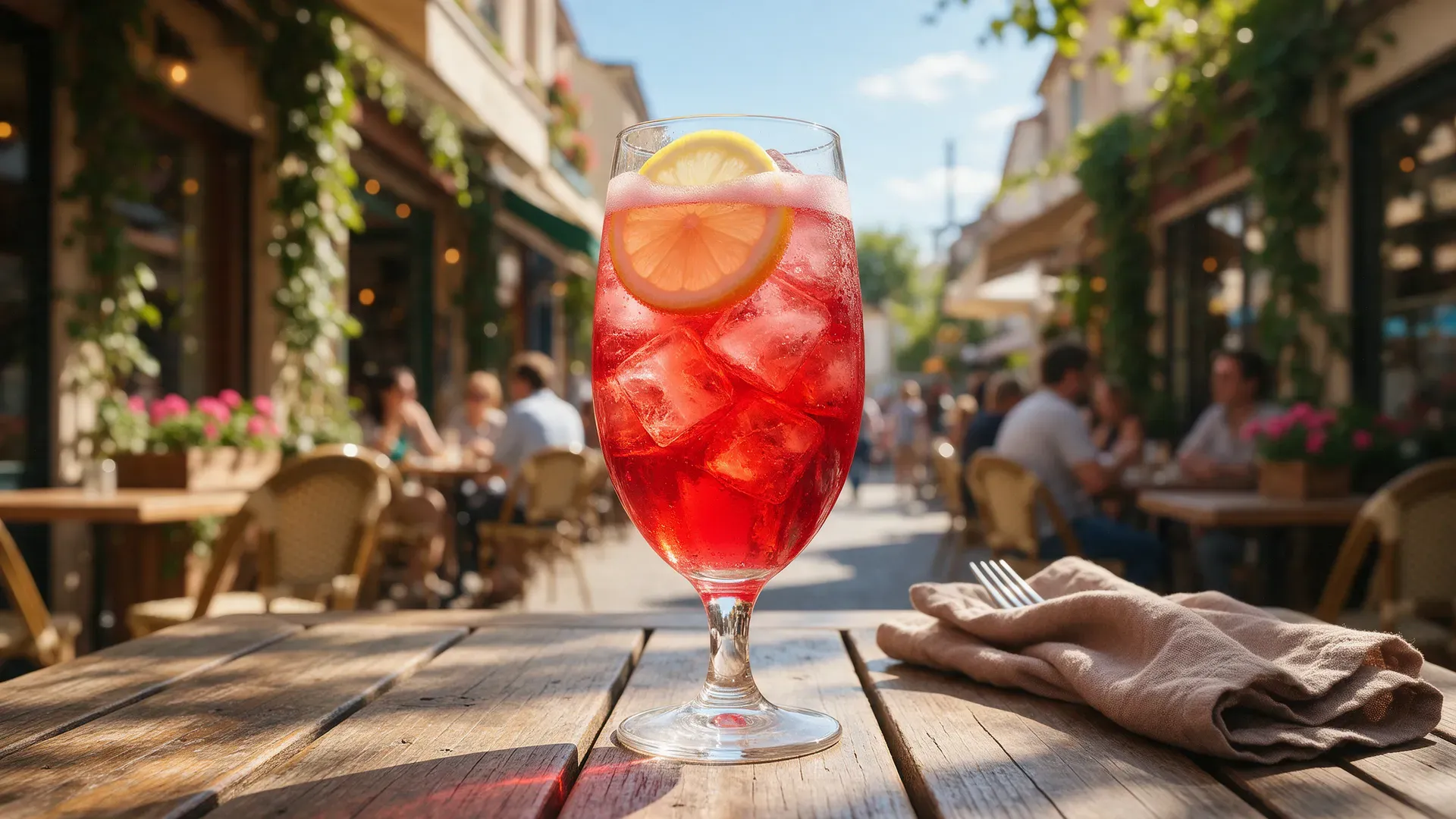
There is a gap between what tourists order in Spain and what Spaniards order next to them. In summer that gap has a name: the visitors get a jug of sangria, and the table of locals gets four glasses of tinto de verano.
Neither drink is a fraud. They are just used differently, and knowing which is which changes what you order abroad.
Tinto de verano is two ingredients
Red wine and gaseosa, a sweetened lemon-flavoured fizzy water, poured over a lot of ice with a slice of lemon. That is the whole recipe. Roughly half and half, adjusted to taste, made in the glass in about five seconds.
It is cheap, it is low in alcohol, and it is what you drink at two in the afternoon when it is too hot to do anything else and you still have the rest of the day to get through. The name means "summer red", and it is ordered by the glass with lunch, not by the jug at a party.
Abroad, most bars will make it with lemonade or a lemon-lime soda if you ask. The result is slightly sweeter than gaseosa, which is closer to soda water with a lemon note than to a soft drink. Ask for less soda and more ice if it comes out syrupy.
Sangria is a punch, and it is a legal term
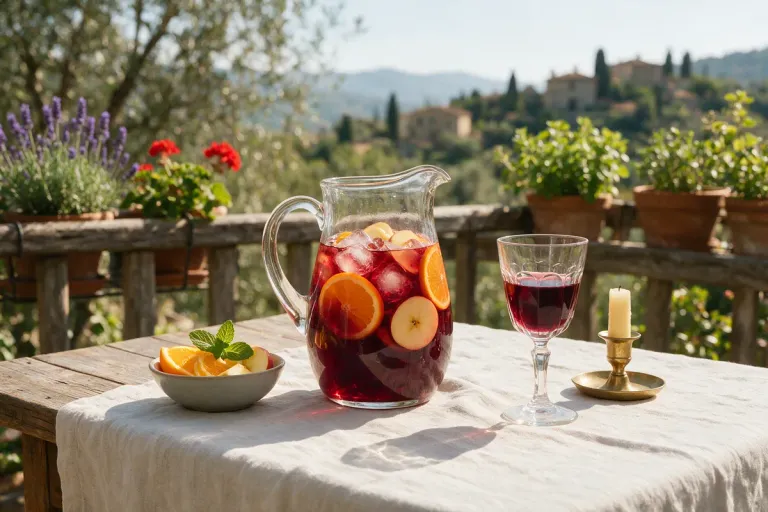
Sangria is red wine with chopped fruit, usually a sweetener, often a measure of brandy or another spirit, and sometimes a top-up of soda. It needs time for the fruit to give something back to the wine, which is why it is made in a jug for a table and not in a glass for one person.
Spaniards do drink it. They drink it at home, at family lunches, at village fiestas and at the beach. What they mostly do not do is order it in a bar in their own city, which is how it ended up with a reputation abroad that it does not entirely deserve.
It also has a legal definition. Regulation (EU) No 251/2014 sets the rules for aromatised wine products, and it reserves Sangria as a sales denomination. Sold within the EU, a product may only carry that name if it was produced in Spain or Portugal. Produced elsewhere, it has to be sold there as an "aromatised wine-based drink", and the word sangria can only supplement that name — with the country of production stated, as in "produced in Germany". Outside the EU the rule does not apply, which is why you will see bottles labelled sangria almost anywhere else.
The same regulation sets what the drink has to be: wine aromatised with natural citrus extracts or essences, optionally with juice and spices, uncoloured, between 4.5 and 12 per cent alcohol, with any colour coming only from the ingredients themselves. That rules out a lot of what gets poured into jugs.
The two other versions worth knowing
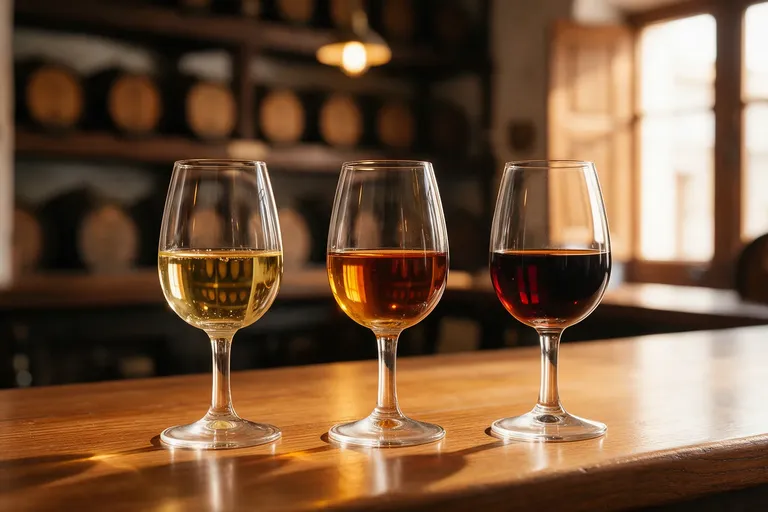
- Rebujito is the Andalusian one: dry sherry, usually manzanilla or fino, lengthened with lemon-lime soda over ice. It is the drink of the Feria de Abril in Seville, where it is sold by the jug and drunk from tumblers. It works because manzanilla is bone dry — the sweetness comes from the soda, not the wine.
- Kalimotxo is the Basque one: red wine and cola, half and half, over ice. It took hold in the Basque Country in the 1970s and spread through student festivals, and it is still what gets drunk at them.
How to tell a good one from a bad one
- Sangria poured from a tap, or from a jug that was already full when you sat down, was made hours ago at best.
- Fruit that has gone grey has been sitting in wine since yesterday. Fresh sangria has fruit that still looks like fruit.
- Tinto de verano should be made in front of you. If it arrives pre-mixed and flat, someone batched it.
- Wine quality matters less than you think in sangria and more than you think in tinto de verano, where there is nowhere for a bad wine to hide behind fruit and sugar.
- If the bar has a Spanish wine list, order a glass of wine instead. That is what the list is for.
Where to try them
- Sangria 71 in Commack, New York, is family-owned and was founded by two Galician brothers — the drink is in the name.
- Meson Sabika in Naperville, Illinois, puts its traditional sangria alongside a wine list and a sherry selection, which is the right order of priorities.
- 22 Ships in Hong Kong keeps sangrias, sherry and vermouth-based drinks on the walk-in bodega table for people without a reservation.
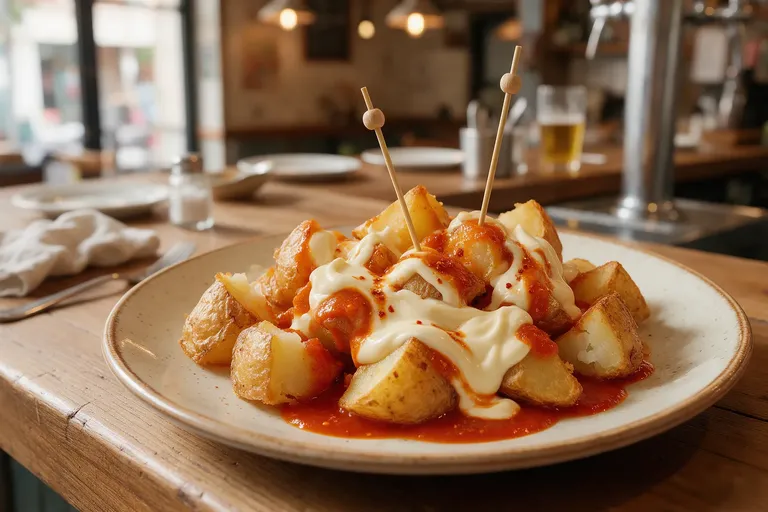
- Las Tapas de Lola in Dublin serves sangria and Spanish wines next to patatas bravas and chorizo.
And if the bar has vermut on draught, that is the drink to order before lunch instead of either of these.