
Sidra
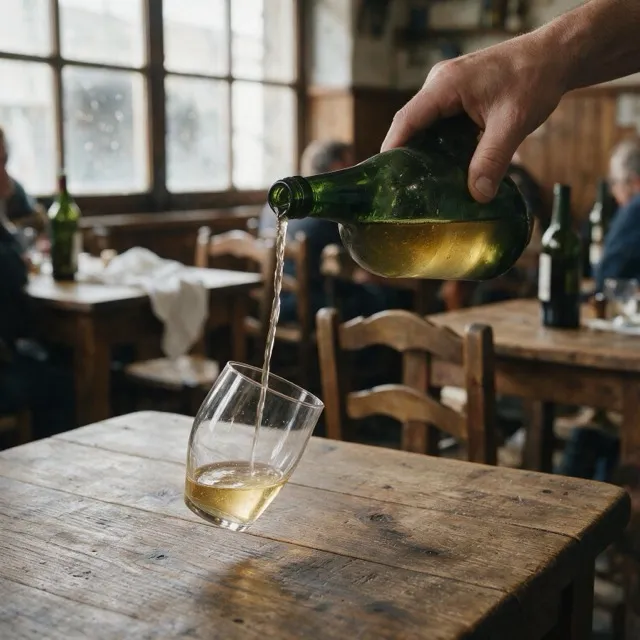
Asturian sidra natural is a bone-dry, still cider that is as much about ritual as flavour: poured from height so it froths briefly to life, then drunk fast. Fermenting your own is a slow, rewarding autumn project.
Approximate, per 1 glass (~200ml). Values vary by recipe and portion.
Ingredients
- ·10 kg mixed cider apples (a blend of sharp, bittersweet and sweet)
- ·Clean water for washing
- ·Campden tablet (optional, to control wild yeast)
- ·Cider yeast (optional; traditional sidra relies on wild yeast)
Method
- 1
Wash the apples well and discard any rotten fruit, then leave them a few days to soften slightly and build sugar.
- 2
Crush or mill the apples into a coarse pulp (the pomace), then leave it to stand for a few hours to deepen colour and aroma.
- 3
Press the pulp firmly to extract every drop of juice, straining it into a sanitised fermentation vessel.
- 4
If controlling the ferment, add a crushed Campden tablet, wait 24 hours, then pitch cider yeast; for a traditional wild ferment, simply leave the fresh juice to start on its own.
- 5
Fit an airlock and ferment in a cool place (around 12-15C) for several weeks until vigorous bubbling subsides.
- 6
Rack the cider off its sediment into a clean vessel and let it mature and clear for two to three months.
- 7
Bottle the still, dry cider and keep it cool.
- 8
To serve, pour a small culin from height into a wide glass so it aerates, and drink it straight away before the froth dies.